Jon Kabat-Zinn book review
Wherever You Go, There You Are Review: Is It Worth Reading?
A warm, practical mindfulness classic with one idea worth keeping for life. Its simplicity is also the reason some readers will find it repetitive.

The short verdict
Yes—if you want to practice mindfulness, not merely learn its definition. Wherever You Go, There You Are is one of the clearest introductions to bringing attention into ordinary moments. It is gentle, credible, and useful. It is not a fast self-improvement system, and experienced meditators may find its central message repeated more often than necessary.
Beginners, distracted readers, and people who want mindfulness without a complicated system.
Reflective fragments can feel repetitive if you want a structured step-by-step program.
Wherever You Go, There You Are at a glance
Plain language and short chapters make the ideas easy to enter.
Walking, sitting, breathing, and daily-life practices require no special equipment.
Beautiful as a collection of reflections; less strong as a linear course.
The main idea stays useful long after the details fade.
The 8.7 score is Sean's editorial judgment, based on clarity, usefulness, structure, and lasting value—not a customer-rating average.
What the book is actually about
Jon Kabat-Zinn's argument is simple: your life is made of present moments, yet the mind spends much of its time replaying the past or preparing for a future that is not here.
The book was first published in 1994. The 30th-anniversary Grand Central Publishing edition arrived in December 2023 with a new introduction, afterword, and factual updates. The official edition is 320 pages, but it does not read like one continuous 320-page argument. It is built from short reflections that can be read separately.
Kabat-Zinn explains mindfulness through ordinary practices: sitting, breathing, standing, walking, noticing the body, patience, trust, non-striving, and what he calls non-doing. He also uses mountain and lake imagery to explore steadiness and awareness.
The title in one sentence
A new city, relationship, job, purchase, or achievement may change your circumstances, but you still arrive with your habits of attention. Wherever you go, your mind comes too.
Book details verified against Hachette, the author's official site, and the current Grand Central Publishing edition listing.
What the book gets right
Mindfulness becomes ordinary
You do not need incense, perfect silence, or a spiritual identity. A cup, a walk, a breath, or washing a dish can become practice.
Attention is not the same as control
The aim is not to force thoughts away. It is to notice what is present without immediately obeying or judging it.
Short practice still counts
The book lowers the barrier to beginning. Five honest minutes can teach more than collecting another hour of meditation theory.
It avoids spectacle
There are no secret frequencies or guaranteed outcomes. The work is quiet: return to the moment and see more clearly.
That grounded tone matters. A large systematic review of meditation programs found small-to-moderate improvements in some areas of psychological stress, while also finding limited or insufficient evidence for several other outcomes. The honest position is that mindfulness can be useful without being a cure-all.
Sean's perspective
The $19.99 moment I could have dismissed
When I was 19, during the Myspace era, I put one of my beats online for sale. I went to sleep and woke up to a $19.99 order from someone I had never met.
The amount was small. The moment was not. I could have looked past it because it was not a huge win. Instead, I paid attention to what had just become true: something I created could reach another person through the internet while I slept.
That one moment did not build my business. Years of work followed. But it changed the direction of my attention. This is where Kabat-Zinn's message has practical force for me. Presence is not passive. Sometimes it is how you notice the small evidence that tells you which path deserves more of your life.
“A present moment can be quiet and still change the direction of everything that comes after it.”

Where the book is limited
An independent review should say where a good book may not be enough.
- It can feel repetitive. The short reflections circle a small set of principles. That works for slow reading but can frustrate someone seeking a tight argument.
- It is not a complete meditation course. It offers many doors into practice, but less troubleshooting for readers who become restless, sleepy, frightened, or overwhelmed.
- Mindfulness can be oversold. Present attention does not fix unsafe work, debt, illness, conflict, or structural problems by itself.
- Not every meditation experience is calm. A systematic review found adverse events are reported in meditation research, though estimates vary widely. People with difficult reactions should reduce intensity and seek qualified support when appropriate.
The strongest contrary view
A fair critic can argue that “be present” becomes a way to help people tolerate conditions they should change. If a workplace is exploitative, a relationship is unsafe, or a practical problem needs a decision, observing the breath is not the whole answer.
I agree with that warning. The best use of mindfulness is not to become comfortable with everything. It is to see clearly enough to know what deserves acceptance, what deserves action, and what deserves an exit.
A lesson from moving countries
Panama changed my environment. It did not remove my mind.
I first reached Panama while staying in Costa Rica and needing to leave briefly because of visa timing. A friend suggested Panama City. I saw a place with modern comfort, deep green nature, ocean, movement, and opportunity. I kept returning, and Panama eventually became home.
Changing where I lived changed what I could see and how I wanted to build my life. But the book's title holds up: the inner person travels too. A new view can create space, yet it does not automatically remove old fears, habits, or distractions.
That is why I would not read this book as “be satisfied and never change anything.” I read it as: stop believing the next location will do all the inner work for you. Notice what is here, make the decision from a clearer place, and then move if moving is true.

Who may benefit—and who may not
Read it if you:
- Are new to mindfulness and want a humane introduction.
- Prefer short reflective chapters over a textbook.
- Want practices that fit into normal life.
- Can read slowly and test one idea at a time.
Skip it for now if you:
- Want a strict eight-week curriculum with progress tracking.
- Already know the foundations and need advanced instruction.
- Want neuroscience to be the center of the book.
- Need immediate professional support rather than a self-guided practice.

Try the book's central idea for five minutes
You do not need to finish the book before testing it. Use this ordinary-moment experiment once a day for a week.
What HM listeners have shared about guided practice
These screenshots are listener feedback already published on the official Hypnotic Meditations reviews page. They describe personal experiences with HM audio—not reviews of Jon Kabat-Zinn or proof of the book's claims.

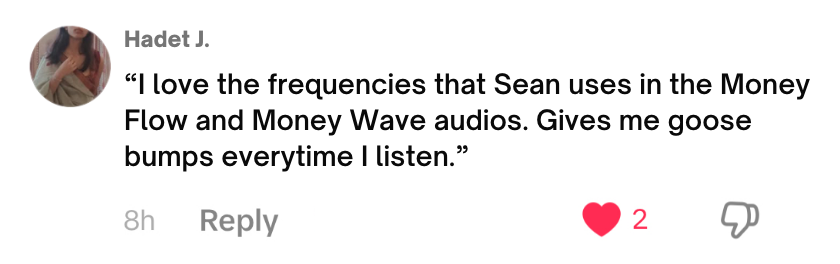
Individual experiences vary. Feedback is not a guarantee of the same result. See the full HM listener-feedback page.
Final verdict
Wherever You Go, There You Are earns 8.7/10 because it makes a deep idea usable without making it grand. Read it slowly. Let the repetition work as a reminder rather than expecting constant novelty. Keep the central lesson: your life is not waiting somewhere else. The next honest moment is where practice begins.
One practical next step
Use MoneyWave when you need help settling into the practice
MoneyWave is the most relevant HM path here because it is a short guided audio for slowing down before sleep and calming mental overactivity. Use it as support for a consistent evening practice—not as a substitute for the present-moment work or appropriate care.
Explore MoneyWaveFrequently asked questions
What is Wherever You Go, There You Are about?
Jon Kabat-Zinn presents mindfulness as paying deliberate, nonjudgmental attention to ordinary life. The short chapters explain sitting, walking, standing, breathing, patience, non-doing, and bringing awareness into everyday moments.
Is Wherever You Go, There You Are worth reading?
Yes, especially for beginners who want a calm, practical introduction to mindfulness. Readers who already know the basics may find some chapters repetitive.
Is Wherever You Go, There You Are easy to read?
Yes. It is written in short reflective chapters rather than as a technical manual, so it can be read a few pages at a time.
Is the book religious?
It draws from Buddhist mindfulness traditions but is presented as an everyday practice rather than a requirement to adopt a religion.
How long is Wherever You Go, There You Are?
The 30th-anniversary Grand Central Publishing edition released in 2023 is 320 pages and includes a new introduction, afterword, and factual updates.
Can mindfulness replace therapy or medical care?
No. Mindfulness can be a supportive practice, but it is not a substitute for appropriate medical or mental-health care.